


Why E-Scooter Tires and Tubes Fail Faster Than Bike Tires
E-scooter flats aren’t just “bad luck.” Scooter tires and tubes fail faster because they run smaller diameters, higher loads per wheel, hotter operating temps, and often higher pressures—while hitting the same Pennsylvania potholes and debris as bikes. This guide explains the real causes and how to reduce repeat flats.

If you’ve owned an e-scooter for any length of time, you’ve probably noticed something: flat tires happen more often than they “should.” And when they happen, they can be more time-consuming to repair than a typical bicycle flat.
This article explains why e-scooter tires and tubes fail faster than bike tires, what we see most often in the service bay at Go Grava, and what you can do to reduce downtime. The goal is simple: fewer repeat flats and a scooter that stays reliable.
1) Smaller Wheels Hit Hazards Harder
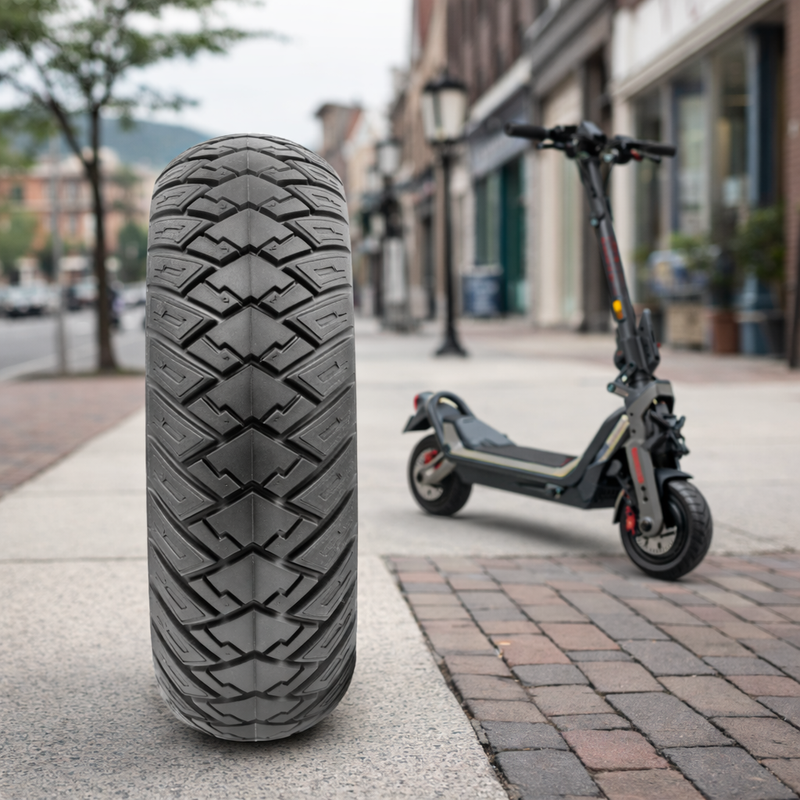
The biggest physics difference is wheel diameter. Most e-scooters use wheels that are far smaller than a bicycle’s 700c / 29" wheel.
- Small wheels fall deeper into cracks and potholes.
- They strike curbs and edges at a steeper impact angle.
- They are more likely to “pinch” a tube between rim and obstacle.
On real roads—broken pavement, expansion joints, curb seams, and storm debris—small wheels are simply more vulnerable. A bike often rolls through what a scooter hits like a hammer.

2) Higher Load Per Wheel (And Less Tire Volume)
Many riders assume “a tire is a tire.” But load distribution matters. Bicycles spread rider weight across two large tires with relatively high air volume. Scooters typically run smaller tires with less air volume, and the load can concentrate depending on stance and scooter geometry.
- Less air volume means less shock absorption.
- Higher load per contact patch increases stress on tube and casing.
- Impacts are more likely to create tube pinches or bead issues.
When you combine higher load with smaller tire volume, you get a tire system that’s more sensitive to pressure, terrain, and impacts.
3) Heat Builds Up Faster on Scooters
Heat is a major flat-accelerator. Scooters commonly run:
- Higher sustained speeds (even when you’re not “working” like you would on a bike)
- Smaller tires spinning at higher RPM for the same road speed
- Frequent acceleration and braking cycles
Heat increases tube stress and can accelerate:
- Valve stem failures
- Tube thinning and premature leaks
- Sidewall fatigue (especially on underinflated tires)
In practical terms: scooters can run hotter, and hot tires are less forgiving.

4) Pinch Flats Happen More Easily
Pinch flats are common on scooters because they combine the worst-case setup: small wheels, sharp impacts, and a tube that can be trapped between rim and obstacle.
Typical pinch-flat causes we see:
- Riding underinflated to “soften the ride”
- Hitting potholes at speed
- Curbs, expansion joints, or sharp pavement edges
If your scooter repeatedly flats after impacts—even when the tire looks fine—pinch flats are likely the culprit.
5) Tube and Tire Quality Varies Widely
Another hard truth: the quality range in e-scooter tires and tubes is broader than in the bicycle world. Many scooters ship with tires and tubes that prioritize cost and availability, not puncture resistance or serviceability.
Common quality-related issues:
- Thin tubes that leak slowly or tear at the valve
- Tires with minimal puncture protection
- Bead tolerances that make mounting difficult and increase pinch risk during install
Even when the tire looks “new,” material quality can determine whether it survives daily riding.
6) Debris Profile is Different
Bicycles often run higher-quality casings and larger tires that can deflect small debris. Scooters may run smaller tires that press into debris more aggressively—especially near curb lines where glass and metal tend to collect.
Common puncture sources for scooters:
- Glass shards near curbs and intersections
- Construction staples, wire, and metal slivers
- Thorns and sharp gravel on shoulder lines
Because scooters frequently ride closer to the curb line, they often encounter a higher concentration of puncture debris.

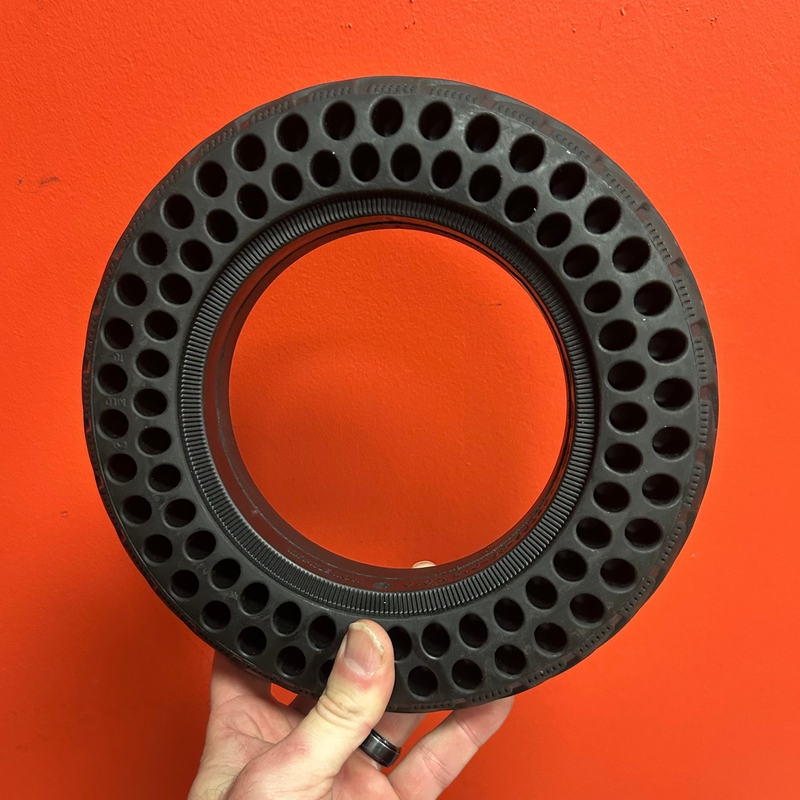
Solid Tires: A Reliable Solution for the Right Scooter
Solid tires can be an excellent solution for e-scooters that experience frequent flats—when they are used correctly. At Go Grava, we recommend solid tires for scooters with a top speed of 27 mph or below.
The reason for this speed limit is safety.
Unlike pneumatic tires, solid tires do not use steel belts to help retain their shape at high rotational speeds. On faster scooters, solid tires can expand under heat and centrifugal force, increasing the risk of the tire losing its seat on the rim.
For that reason, we do not install solid tires on high-speed scooters.

Why We Often Recommend Starting with the Rear Tire
If your scooter is experiencing frequent flats, we usually recommend converting the rear tire to solid first.
- The rear tire typically carries more load
- It is more prone to debris pickup
- Rear flats are more disruptive to ride safety
Running a solid rear tire with a pneumatic front tire often provides the best balance of reliability, ride comfort, and steering control. It also lets you evaluate ride feel before committing to a full solid-tire conversion.

How to Reduce Repeat Flats
If you’re tired of replacing tubes, start here. These steps typically make the biggest difference:
- Keep pressure in the correct range: Underinflation is the fastest path to pinch flats and heat damage.
- Inspect the tire before installing a new tube: If debris is still embedded, you’ll puncture the next tube immediately.
- Replace worn tires early: Bald centers and cracked sidewalls lose protection fast.
- Use better tubes and puncture-resistant tire options when available: The “cheapest tube” is rarely the cheapest outcome.
- Check rim tape / liners and rim edges: Internal issues can cut tubes from the inside.
Important: Always confirm tire size, valve type, and compatibility before changing parts. If you’re unsure, it’s better to verify than to force-fit a tube that fails early.
Frequently Asked Questions
Why do e-scooter tires go flat so often?
Small wheels hit hazards harder, tubes pinch more easily, and heat builds faster. Many scooters also ship with thin tubes and minimal puncture protection, which increases failure rates.
Are scooter flats usually punctures or pinch flats?
We see both. Punctures come from glass and metal debris near curb lines. Pinch flats happen when tires are underinflated and the wheel hits an edge, trapping the tube between rim and obstacle.
Does tire pressure really matter that much on a scooter?
Yes. Pressure is one of the biggest controllable factors. Too low increases pinch flats and heat damage. Too high can reduce grip and ride quality. Correct pressure is the best “flat prevention” starting point.
Why do I get another flat right after replacing the tube?
Most commonly, debris is still embedded in the tire or the tube was pinched during installation. Always inspect the casing carefully, check the rim interior, and verify correct tube sizing before reinstalling.
Are solid tires a good solution for flat prevention?
Solid tires can be a great solution for scooters with top speeds of 27 mph or below, especially for riders dealing with frequent flats. However, they are not appropriate for higher-speed scooters because solid tires lack steel belts and can expand at speed, increasing safety risk. Professional installation is strongly recommended.
Should I convert both tires to solid, or start with one?
We often recommend starting with the rear tire. Rear flats are more disruptive, and a solid rear tire with a pneumatic front tire can provide a strong balance of reliability, comfort, and steering control.
Local Service Note
If your scooter is repeatedly flatting, the fastest fix is usually identifying the real cause—embedded debris, install pinch, rim issues, incorrect sizing, or a tire that’s simply worn out. A correct repair is almost always cheaper than replacing tubes over and over.
Leave a comment