


How to Choose a Bike Helmet (Fit, Safety Standards, and What Actually Matters)
Most helmet mistakes aren’t about brands—they’re about fit and setup. A helmet only protects you if it sits correctly, stays stable while you ride, and matches the kind of riding you actually do. This guide explains fit, safety standards, rotational-impact tech like MIPS, and the buying mistakes that cause riders to replace helmets early.
Helmets are one of the few pieces of gear that nearly every rider agrees on: they matter. The confusion starts when you try to buy one. Riders often choose a helmet based on looks, price, or a feature list—then discover it doesn’t feel right, shifts while riding, or causes pressure points after an hour. That’s when the “I guess I need a different helmet” cycle begins.

In real bike-shop experience, the helmet itself is rarely the only problem. Most issues come down to fit, stability, and setup. A helmet can meet safety standards and still fail you in practice if it doesn’t sit correctly on your head or if you don’t set up the straps and retention system properly.
The biggest misconception: “all helmets are basically the same”
It’s true that helmets sold for cycling must meet certain safety requirements. That leads many riders to assume the differences are mostly cosmetic. But helmets vary in ways that matter a lot in real use: head shape compatibility, retention design, ventilation, coverage, and how stable the helmet remains when you look around, stand up on a climb, or hit rough pavement.
Shop-floor reality: A helmet that meets standards but fits poorly can shift out of position in the moments you need it most.
Think of safety certification as a baseline. It tells you the helmet meets minimum performance requirements in controlled tests. It does not guarantee a match for your head shape, your riding posture, or how the helmet will stay positioned during movement.
Why riders end up replacing helmets early
Why riders end up replacing helmets early
- Wrong shape match: The helmet is “the right size” but creates hot spots because the internal shape doesn’t match the rider’s head.
- Wrong size choice: Riders size up for comfort, then can’t stabilize the helmet without overtightening.
- Poor strap setup: Straps aren’t positioned correctly, so the helmet rocks or drifts during riding.
- Retention issues: The dial or cradle doesn’t secure the helmet evenly, causing pressure points.
- Heat and ventilation mismatch: A helmet that feels fine in the store becomes unbearable on summer rides.
- Style over stability: Riders tolerate a loose fit for aesthetics, then lose confidence in how it wears.

Helmet fit: the non-negotiable foundation
Helmet fit is about more than circumference. Two helmets labeled “Medium” can fit very differently because internal shape varies by model and brand. Most fit problems come from confusing size with shape: the helmet might be the correct measurement but still create pressure in the forehead, temples, or back of the skull.
What a properly fitted helmet should feel like
- Level position: The helmet sits level on your head, not tipped back. The front edge typically sits low enough to protect the forehead.
- Stable without straps: With the straps unbuckled, the helmet should still feel reasonably stable when you gently move your head.
- Even contact: No single sharp pressure point. Some snugness is normal; concentrated pain is not.
Quick fit check: Put the helmet on, leave straps unbuckled, and gently shake your head “no.” If it slides or rotates easily, it’s probably too large or mismatched in shape.
Comfort matters because it drives behavior. A helmet that’s irritating will get worn incorrectly, loosened too much, or left at home. The safest helmet is the one you’ll consistently wear and keep positioned correctly.
Retention systems and strap setup (where most people go wrong)
Helmet stability comes from two systems working together: the retention cradle (often a dial system) and the straps. Many riders overtighten the dial to “make it safe,” then leave straps too loose. That creates pressure points and still allows movement.
Retention (dial) systems: what matters
- Even pressure: The cradle should tighten evenly around the head, not pinch in one spot.
- Occipital support: The rear cradle should sit low enough to “cup” the back of the skull without digging in.
- Range of adjustment: You should be able to fine-tune tension without maxing out the dial.
Strap setup: the simple way to get it right
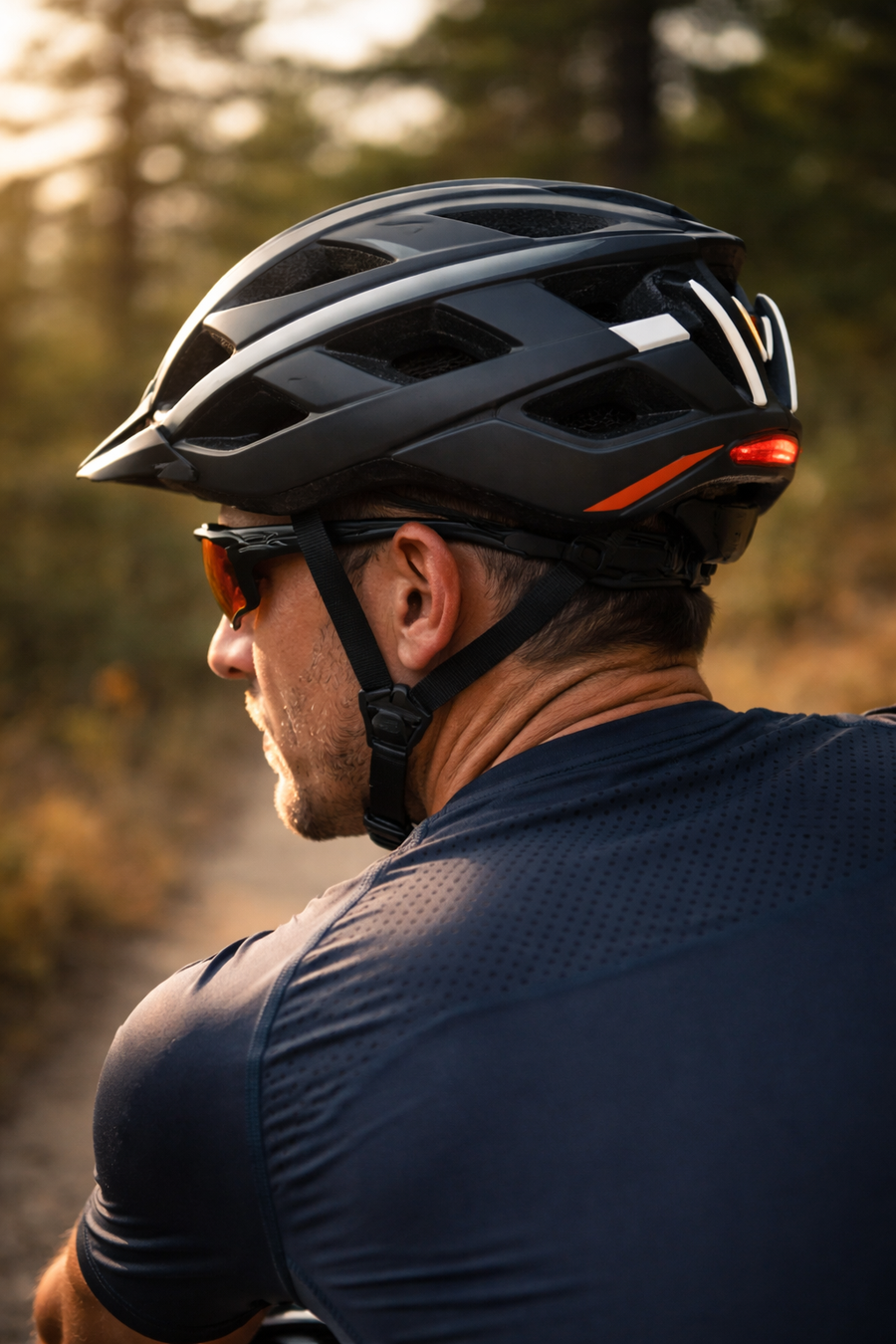
- Side straps: Make a clean “V” around the ears—no twisted straps.
- Chin strap: Snug enough that you can open your mouth comfortably, but not so loose that the helmet lifts off your forehead.
- Stability test: With the chin strap buckled, gently push the helmet forward and backward. It should not roll far enough to expose your forehead or slide backward significantly.

Most common mistake: Riders tighten the dial aggressively and treat the straps as optional. In real use, straps are what prevent roll and ejection.
Safety standards explained (without the marketing noise)
Safety standards help ensure helmets meet minimum performance requirements. In the U.S., most adult cycling helmets are certified to CPSC. That certification matters, but it should be understood as a baseline. Certification tells you the helmet met a standard in testing; it does not tell you it fits your head correctly or stays stable when you ride.
What certification does—and does not—tell you
- Does: Confirms the helmet meets minimum impact performance requirements under a defined test method.
- Does not: Guarantee comfort, stability, correct sizing for your head shape, or that it will be worn correctly.
Price is also a weak proxy for safety. Higher-end helmets often add better ventilation, lower weight, improved retention, and additional features. Those can improve comfort and consistency of use—both valuable. But “more expensive” does not automatically mean “more protective for you” if the fit is worse.
Rotational Impact Protection (MIPS): What It Helps—and What It Doesn’t
Most helmet safety testing focuses on straight-on impacts. In the real world, many crashes are angled: the rider falls, the helmet contacts the ground off-center, and the head experiences rotational forces. These twisting forces can strain the brain differently than a direct hit.
MIPS (Multi-directional Impact Protection System) is designed to address that specific scenario. It adds a low-friction layer inside the helmet that allows a small amount of controlled movement between the helmet shell and the rider’s head during certain angled impacts. The goal is to reduce some of the rotational forces transmitted to the brain.

Important context: MIPS is designed to reduce certain rotational forces. It does not eliminate injury, prevent concussions outright, or replace proper helmet fit.
In practice, MIPS works best as a supplement to a well-fitting helmet. If a helmet is the wrong size, shifts during movement, or creates pressure points that cause you to wear it incorrectly, MIPS cannot compensate for those issues. A properly fitted helmet without MIPS will often outperform a poorly fitting helmet with it.
MIPS tends to be most compelling when a rider is already choosing between two helmets that fit equally well. In that situation, adding rotational-impact protection can make sense—especially for higher speeds, mixed-surface riding, or riders who want an extra layer of protection without a major weight penalty.
The key is understanding what MIPS is—and isn’t. It’s a meaningful safety technology, but it’s not a guarantee and not a substitute for fit, stability, and correct setup. Like most helmet features, it works best when the fundamentals are already right.
Shop Bike Helmets
If you want to compare options with the fit principles in this guide, browse our helmet collection here: Go Grava Helmets.
Choosing a helmet by riding style
Riding style influences the features that matter most: ventilation, coverage, stability at speed, and all-day comfort. Use these as practical starting points, then prioritize fit above everything.
Road riding
Road riders often care about ventilation, weight, and stability at higher speeds. A helmet that stays planted when you look over your shoulder or ride in gusty conditions matters more than most riders realize. Choose a model that fits your head shape without pressure points, and make sure it can be secured without overtightening.
Gravel and mixed-surface riding
Gravel riders deal with vibration, dust, and changing surfaces. Stability and comfort over long rides are key. Coverage and retention can matter more than weight. Many riders also like features that improve comfort in varied conditions, but the “best” gravel helmet is still the one that fits and stays stable during movement.
Commuting and urban riding
Commuters need a helmet that’s comfortable day after day. Practical priorities often include durability, easy adjustment, and stable fit for frequent stops and starts. If your commute includes riding in traffic, stability and consistent use matter more than “race” features.
Casual and recreational riding
Casual riders benefit most from a helmet that’s comfortable, easy to adjust, and stable without fuss. Many recreational riders buy too large for comfort, then wear it tipped back or loose. A properly sized helmet that sits level and stays in place is the real upgrade.

When to replace a helmet (and when you don’t need to)
Helmets are designed to manage impact by deforming. That means one significant impact can compromise the foam even if the helmet looks fine. The safest rule is simple: if a helmet takes a meaningful crash impact, it should be replaced.
Replace your helmet if
- You were in a crash and your head hit the ground (even if there’s no visible damage)
- The shell is cracked, the foam is dented, or the retention system is damaged
- The straps or buckle are frayed, compromised, or no longer hold adjustment
- The helmet no longer fits securely due to broken adjusters or worn padding
Not every helmet needs replacement just because time has passed, but age and exposure do matter. Heat, sweat, UV exposure, and daily use can degrade components over time. If a helmet can’t be adjusted to sit securely and comfortably, it’s no longer doing its job—even if it hasn’t been crashed.
Practical guideline: If you can’t get a helmet to sit level and stable anymore, it’s time to replace it. Stability is a safety feature.
Buy-once helmet checklist
Buy-once helmet checklist
- Start with fit and shape. “Medium” doesn’t mean it matches your head shape.
- Confirm level position. Helmet should not be worn tipped back.
- Stability before tightening. It should feel stable even before the straps are buckled.
- Set straps correctly. Clean V around the ears, snug chin strap.
- Adjust retention last. Tighten only enough to keep it stable without pressure points.
- Choose features after fundamentals. Ventilation, weight, and MIPS matter most when fit is already right.
Common helmet buying mistakes we see in the shop
- Buying based on brand or looks first. Fit issues show up later and force replacements.
- Sizing up for comfort. A helmet that’s too large can’t be stabilized correctly without overtightening.
- Wearing it tipped back. This reduces forehead protection and changes how the helmet performs in a fall.
- Overtightening the dial. This creates pain and doesn’t solve poor strap setup.
- Ignoring strap adjustment. Straps prevent roll and ejection—both are critical in real crashes.
FAQs
How tight should a bike helmet be?
It should be snug enough to stay stable and level without pressure points. You should be able to open your mouth comfortably with the chin strap buckled, and the helmet should not rock significantly when you move your head. Over-tightening often creates discomfort and encourages riders to wear the helmet incorrectly.
Are expensive helmets safer?
Not automatically. Higher-end helmets often improve comfort, ventilation, retention, and weight—which can increase how consistently and correctly you wear the helmet. But a less expensive helmet that fits properly can be a better real-world choice than a premium helmet that fits poorly.
Do more vents make a helmet less safe?
Venting design varies by model, but helmets still must meet safety standards. The bigger issue is whether the helmet fits correctly and stays positioned. Ventilation is a comfort feature that matters most when the helmet is stable and set up properly.
How do I know if a helmet matches my head shape?
If you feel sharp pressure in the forehead, temples, or back of the head even when the helmet is the correct circumference, it may be a shape mismatch. The helmet should feel evenly snug, not painful in one concentrated spot. Trying a different model or internal shape often solves this without changing size.
Do I need MIPS?
MIPS can be a worthwhile addition when comparing two helmets that fit equally well. It is designed to reduce certain rotational forces in angled impacts, but it’s not a guarantee and it cannot compensate for poor fit or incorrect setup. Fit, stability, and correct strap adjustment should be the first priority.
When should I replace my helmet?
Replace a helmet after a significant impact where your head hit the ground, even if damage isn’t visible. Also replace it if the shell is cracked, the foam is dented, straps are compromised, or the retention system no longer holds adjustment. If you can’t get the helmet to sit level and stable anymore, it’s time.
A helmet isn’t a feature list—it’s a safety system that only works when it fits correctly, stays stable while you ride, and is set up properly every time. Start with fit and stability, then choose ventilation, weight, and technologies like MIPS as refinements. When you treat helmet choice as a buy-once decision based on fundamentals, you end up safer—and you stop replacing helmets that never truly fit in the first place.
Leave a comment