


Gravel Tire Tread Patterns Explained (File, Semi-Knob, Knob)
Gravel tire tread decides how your bike behaves long before fitness or gearing does. Understanding tread patterns helps riders choose control, confidence, and comfort instead of chasing marketing claims.
Gravel tires are one of the most misunderstood parts of a gravel bike. Riders often shop by brand, width, or what they see online, without really understanding what the tread is doing underneath them. The result is usually the same: a bike that feels nervous in corners, harsh over distance, or unpredictable when conditions change.
Gravel riding in Pennsylvania makes tire choice especially important. Our routes aren’t uniform. You move constantly between pavement, hardpack, loose-over-hard gravel, chunky sections, and seasonal debris. Tread pattern is what determines whether those transitions feel calm and controlled—or stressful and fatiguing.
This guide explains how gravel tread patterns actually work, using the Vittoria Terreno lineup as clear, real-world examples. These aren’t “fastest tire” claims. They’re practical reference points that make it easier to understand when a file tread works, when semi-knobs shine, and when real knobs matter.
Why Gravel Tire Tread Matters More Than You Think

Gravel tire tread doesn’t just affect speed. It affects how predictable the bike feels, how confidently you brake, how relaxed you are through corners, and how much tension you carry in your body over time.
A tire with too little tread for the terrain often feels “fast” right up until it doesn’t. When grip breaks unexpectedly, riders tense up. They brake earlier, steer cautiously, and brace with their hands and shoulders. That tension builds fatigue long before legs give out.
On the other end, a tire with more tread than you need can feel slow and noisy on pavement. But it may also feel calm, planted, and forgiving when surfaces deteriorate. Over longer rides, especially in Pennsylvania’s mixed conditions, that predictability often matters more than a small increase in rolling resistance.
Tread pattern is about matching grip to reality, not to ideal conditions.
Pennsylvania Gravel Reality: Surfaces Change Constantly
Pennsylvania gravel is rarely consistent for long. Even a single ride might include:
- Long pavement connectors between trail segments
- Hardpacked limestone rail trails
- Loose gravel on farm roads
- Loose-over-hard sections that feel stable until they don’t
- Chunky gravel and debris near wooded areas
Seasonal changes add another layer. Spring brings wet gravel and soft shoulders. Summer brings dust and marbles. Fall adds leaves that hide traction. Winter freeze-thaw cycles break up surfaces and create unpredictable grip.

This constant variation is why tread versatility matters so much here. A tire that only works well in one condition forces you to ride cautiously everywhere else.
Why Gravel Tire Pressure Matters More Than Tread
One of the most common mistakes we see with gravel bikes is overinflated tires. Riders obsess over tread patterns, casing materials, and bike geometry, but then inflate their tires to pressures that completely undermine all of those design choices.
On gravel, comfort does not come from softness. It comes from controlled deformation. A gravel tire is designed to flex just enough to absorb vibration, maintain traction, and stay predictable as surfaces change. When tire pressure is too high, the tire stops deforming and starts bouncing. That vibration goes straight into the rider’s hands, arms, shoulders, and lower back.

This is especially noticeable on Pennsylvania gravel. Our roads and trails constantly alternate between pavement, hardpack, loose gravel, and broken surfaces. A tire inflated like a road tire might feel quick on the first smooth section, but over the course of a long ride it creates fatigue far earlier than most riders expect.
Lowering pressure does not mean making the tire feel squishy or slow. When pressure is set correctly, the tire maintains its shape while allowing the casing to conform to the terrain. The contact patch becomes more stable, braking improves, and small surface imperfections are absorbed instead of transmitted. Riders stay seated longer, grip the bars less tightly, and feel calmer through corners.
This is where many riders misdiagnose the problem. They assume discomfort means the bike needs more suspension, different geometry, or wider handlebars. In reality, the tire is simply too stiff to do its job. Gravel tires are engineered to be part of the suspension system, but only when pressure allows them to work.
Correct tire pressure also sets the stage for tread performance. A file tread, semi-knob, or aggressive knob cannot engage properly if the tire is skipping across the surface. Controlled deformation allows the tread to stay in contact with the ground, which improves predictability and reduces sudden traction loss.
Before changing tires, components, or bikes, pressure should always be addressed first. It is the simplest adjustment, and often the most impactful one, for improving comfort and confidence on gravel.
File Tread Explained: Smooth Center, Predictable Efficiency
File tread tires use a smooth or nearly smooth centerline with subtle texture, paired with small shoulder features. The goal is efficiency on pavement and hardpack while still offering some lateral grip when leaned over.

On smooth gravel and pavement connectors, file treads roll quietly and efficiently. They feel fast and responsive, especially for riders spending a lot of time linking gravel segments with roads.
The limitation appears when surfaces loosen up. On fine loose gravel or off-camber sections, file treads rely heavily on shoulder engagement. When the tire isn’t leaned far enough, grip can feel vague. When leaned too far, breakaway can feel sudden.
File treads work best when riders understand their limits and spend most of their time on hardpack and pavement.
Semi-Knob Tread Explained: Balanced Grip for Mixed Gravel

Semi-knob treads bridge the gap between efficiency and control. They typically use a low-profile, tightly packed center tread paired with more pronounced shoulder knobs.
The center tread maintains reasonable rolling speed, while the shoulders provide confidence when cornering or braking on loose surfaces. This balance makes semi-knobs extremely popular for mixed gravel riding.
For many Pennsylvania routes, semi-knob tires feel like the safest default. They don’t excel at one surface, but they handle frequent transitions without forcing the rider to constantly adjust technique.
Transition Knobs and Why They Matter in Corners
Transition knobs sit between the center tread and the outer shoulder knobs. Their job is to smooth the shift from upright riding to leaned-over cornering.

Without good transition support, a tire can feel fine upright and solid once fully leaned—but vague and nervous in between. That “in-between” zone is where many gravel washouts happen.
Well-designed transition knobs create predictable engagement. As the bike leans, grip builds gradually instead of suddenly. This predictability reduces rider tension and allows smoother, more confident cornering.
Knobbed Tread Explained: Control on Loose and Chunky Gravel
Knobbed gravel tires use larger, more widely spaced tread blocks. These knobs dig into loose surfaces, provide braking traction, and clear debris more effectively.
The tradeoffs are clear: more noise, more vibration on pavement, and slightly higher rolling resistance. But in loose or chunky conditions, knobbed treads offer confidence that smoother tires simply can’t.
For riders frequently encountering unpredictable gravel, chunky descents, or mixed terrain, knobbed tires often reduce fatigue by increasing confidence. A calm rider uses less energy than a tense one.

Vittoria Terreno T10 — Pavement + Hardpack

Available at Go Grava.
Stocked in-store and supported by our service team in Wyomissing, PA.
The Vittoria Terreno T10 represents a classic file tread approach. It uses a smooth centerline flanked by tightly packed hexagonal tread on the shoulders.
This design is ideal for rides that are mostly pavement and hardpacked gravel, with occasional detours onto rougher sections. The Endurance compound infused with Graphene balances grip and durability, while the 100 TPI nylon endurance casing remains responsive.
Additional anti-puncture belting beneath the tread, paired with reinforced sidewalls and bead protection, helps reduce back-road flats—important for long connector-heavy rides around Reading and Wyomissing.
The T10 is best for riders prioritizing efficiency who still want some margin for imperfect gravel.
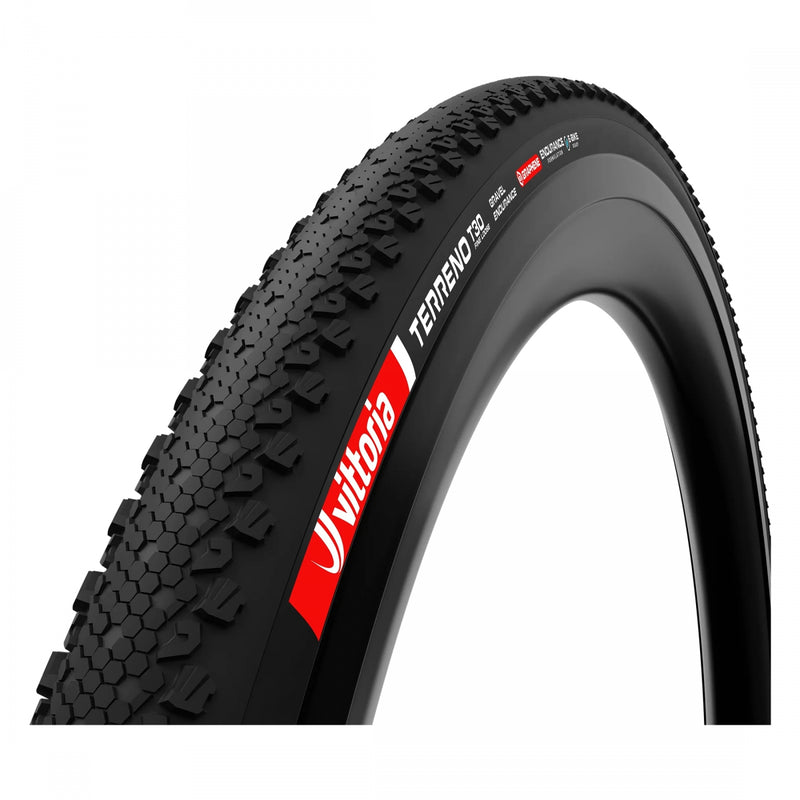
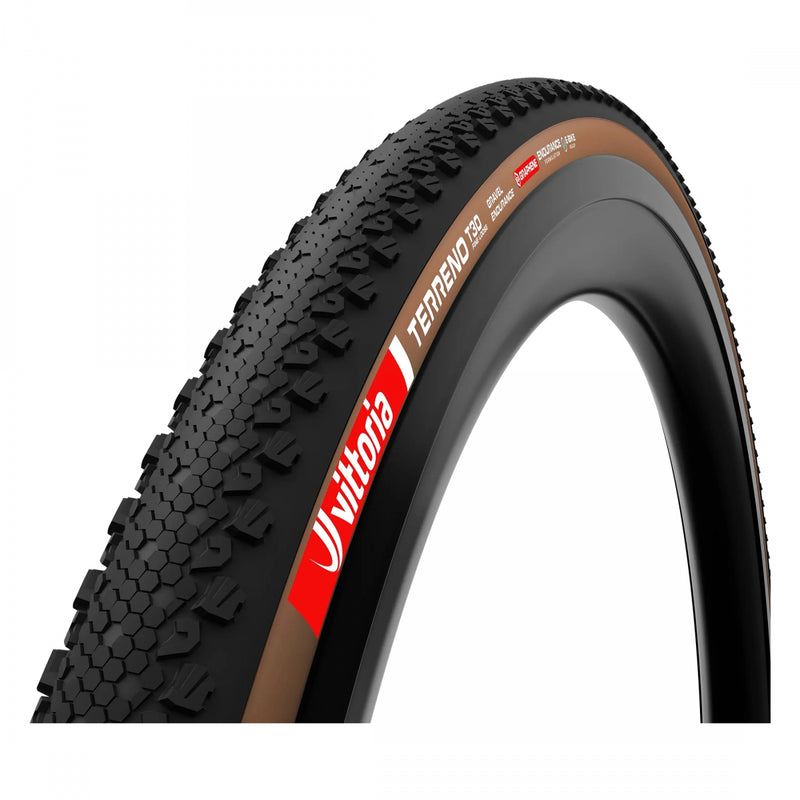
Vittoria Terreno T30 — Fine Loose Gravel

Available at Go Grava.
Stocked in-store and supported by our service team in Wyomissing, PA.
The Terreno T30 is designed specifically for fine loose gravel. It uses a low-profile, densely packed octagonal tread pattern with stepped shoulder knobs.
This tread maintains efficiency while adding noticeably more grip on loose-over-hard surfaces. It’s particularly effective on dusty summer gravel and farm roads where traction can disappear quickly.
Like the T10, the T30 uses Vittoria’s Endurance compound with Graphene, a 100 TPI endurance casing, and anti-puncture belting. The difference is confidence when the surface isn’t fully locked in.
This tire often surprises riders who expect file treads to struggle on loose gravel.
Vittoria Terreno T50 — True Mixed Conditions

Available at Go Grava.
Stocked in-store and supported by our service team in Wyomissing, PA.
The Terreno T50 is designed for riders who encounter constant surface changes. It uses a densely packed, low-profile center tread with larger transition knobs and distinct corner lugs.
This combination provides predictable grip across pavement, hardpack, loose gravel, and mixed terrain. Braking traction improves, and cornering feels more controlled when conditions deteriorate.
The 100 TPI nylon casing balances durability with a supple ride feel, while the Endurance compound and puncture protection keep reliability high.
For many Pennsylvania riders, the T50 ends up being the “safe choice”—not because it’s flashy, but because it rarely feels out of place.
Vittoria Terreno T60 — All-Terrain Gravel

Available at Go Grava.
Stocked in-store and supported by our service team in Wyomissing, PA.
The Terreno T60 moves further toward all-terrain control. Its proven V-formation tread pattern and uniform profile deliver confident cornering and consistent handling.
This tire is designed to handle everything from hardpack to loose chunky gravel and loose-over-hard conditions. The uniform tread profile helps the tire feel predictable even when fatigued late in a ride.
As with the rest of the lineup, the Endurance compound with Graphene, 100 TPI casing, and reinforced puncture protection support long-term durability.
The T60 is well suited to riders who don’t want to think about terrain before every ride.
Vittoria Terreno T70 — Aggressive Mixed & Chunky Gravel

Available at Go Grava.
Stocked in-store and supported by our service team in Wyomissing, PA.
The Vittoria Terreno T70 steps firmly into aggressive gravel territory. It features a more open, knobby tread pattern designed to deliver confident traction on loose, chunky, and unpredictable surfaces.
Compared to the T60, the T70 prioritizes bite and braking control over outright efficiency. Larger, more defined knobs help the tire dig into loose gravel and maintain stability on steep or technical sections.
The 100 TPI nylon casing, Endurance compound infused with Graphene, and reinforced puncture protection make the T70 well suited for demanding rides, heavier loads, and riders who value control over speed.
With an E50 rating, the T70 is also a strong option for e-gravel bikes and riders who regularly push into rougher terrain where durability and traction matter most.
Vittoria Terreno T80 — Maximum Bite for Loose / Technical Gravel
The Vittoria Terreno T80 is the most aggressive option in the Terreno progression. It’s built for riders who regularly encounter very loose, chunky gravel, steep technical descents, and mixed off-road terrain where braking traction and cornering bite matter more than rolling speed.
For most gravel riding in the Berks County area—where routes often include pavement connectors, hardpack, and mixed gravel—the T80 can be more tread than you actually need. That extra aggression can feel slower and noisier on the road, and it isn’t always necessary unless your rides consistently push into rougher surfaces.
We can special-order the Terreno T80 at Go Grava. If you think your routes or riding style call for maximum traction, stop by the shop in Wyomissing or reach out and we’ll help you choose the right casing, width, and setup for your terrain.
How Tread Pattern Affects Fatigue and Confidence
Tire choice influences how relaxed you ride. When grip is predictable, riders stay seated longer, steer smoothly, and brake later with confidence.
Unpredictable traction forces constant micro-corrections. That tension shows up in hands, shoulders, and lower back long before legs are tired.
In real-world gravel riding, a tire that inspires confidence often leads to faster average speeds—not because it’s technically faster, but because the rider stays relaxed.
Common Gravel Tire Mistakes We See
- Choosing slick tires for loose, unpredictable terrain
- Running aggressive knobs for pavement-heavy routes
- Ignoring casing strength and puncture protection
- Copying influencer setups without matching local conditions
Most of these mistakes come from misunderstanding how tread patterns actually work.
How We Help Riders Choose the Right Tread at Go Grava
At Go Grava in Wyomissing, we start with where and how you ride—not what’s trending. We look at surface mix, ride length, cadence style, and bike setup.
Because we stock Vittoria gravel tires in-store, riders can see and feel the differences between tread patterns before committing. Matching tread to terrain reduces flats, improves confidence, and keeps rides enjoyable over the long term.
The right gravel tire isn’t about speed claims. It’s about choosing a tread pattern that makes Pennsylvania gravel feel predictable instead of punishing.
FAQ
/Is a file tread fast enough for gravel?
Yes—on hardpack and pavement-heavy routes. File treads roll efficiently and feel fast, but they require careful riding on loose or off-camber surfaces.
/Do knobs slow you down that much?
On pavement, yes. On loose gravel, knobs often make riders faster overall by increasing confidence and reducing braking and hesitation.
/Can one tread handle all Pennsylvania gravel?
Semi-knob and mixed-condition treads handle most PA gravel well, but no tire is perfect for every surface. Compromise is unavoidable.
/How does tread affect braking?
More pronounced tread improves braking traction on loose surfaces. Smooth treads rely more on technique and surface consistency.
/Are E-rated gravel tires worth it?
For heavier bikes, e-bikes, and demanding terrain, E-rated tires offer added durability and safety margins that can be worthwhile.
Local Gravel Tire Support in Wyomissing / Reading
Choosing the right gravel tire is one of the easiest ways to improve comfort, confidence, and reliability. Pennsylvania gravel rewards tread patterns that match reality, not hype.
At Go Grava, we help riders select tires based on local terrain, ride style, and long-term ownership—not just what’s popular online. The right tread makes gravel riding calmer, safer, and more enjoyable mile after mile.
Leave a comment